
As we enter 2026 with a fresh set of resolutions, many of us find ourselves returning to familiar goals, such as getting back into shape. Like many at the start of the year, I am intent on making 2026 a year of regaining and maintaining genuine strength and fitness. When reflecting on the listed property sector’s trajectory over the past decade and the outlook for 2026, this is a fitting analogy.
From looking fit to being fit
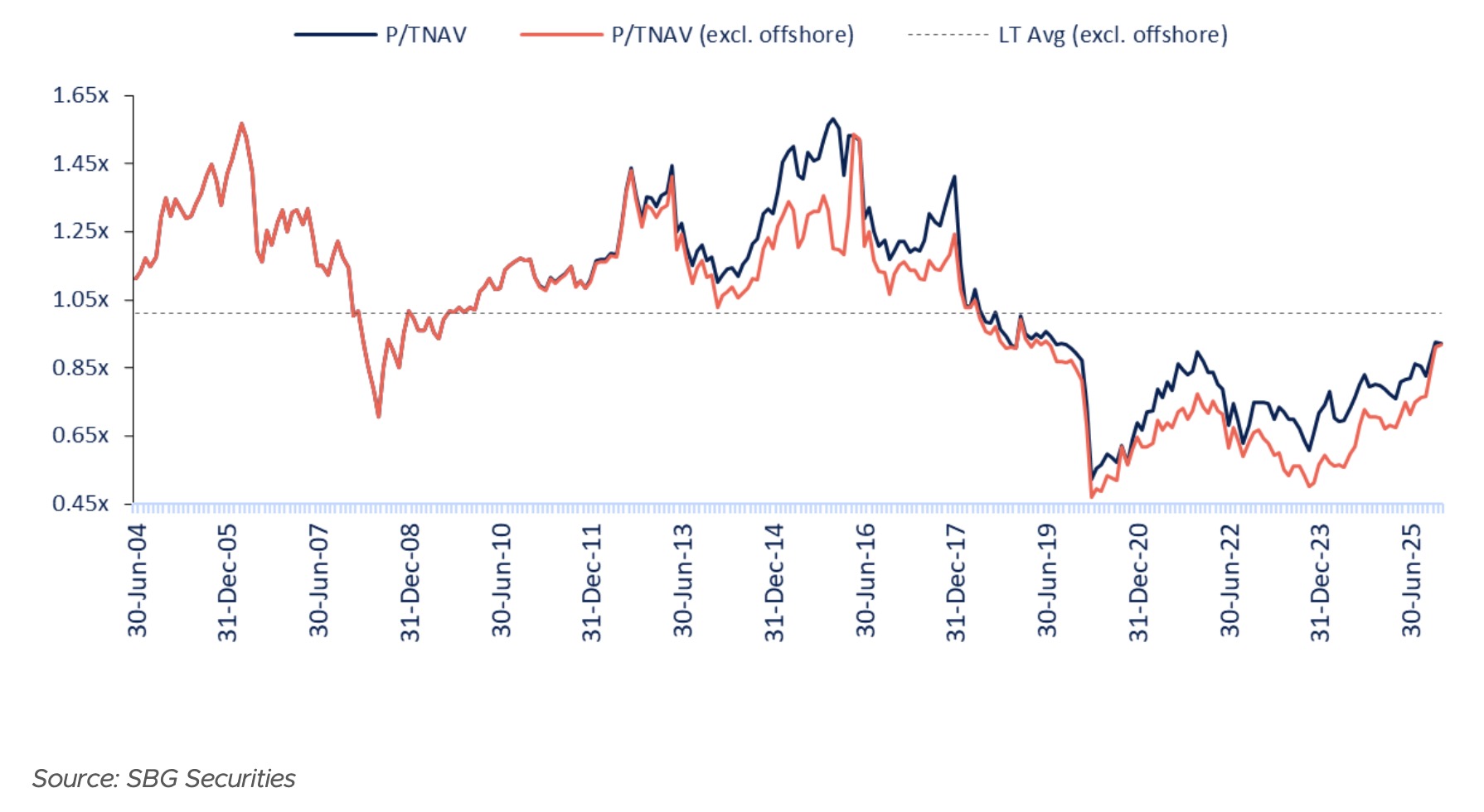
Cast our eye back to the sector’s pre-2017 heyday, and listed property appeared, at least optically, to be in peak condition. Valuations were elevated, capital was abundant, and the sector appeared to be thriving on the surface. In hindsight, however, much of that apparent fitness rested on an unsustainable calorie deficit: cheap funding, supportive liquidity, benign macro assumptions and capital indiscriminately chasing yield.
The sector looked fit, but it wasn’t necessarily well-nourished. Over time, the consequences of that imbalance began to surface. Rising risk premia, a more challenging macro backdrop and emerging governance cracks revealed that the sector’s resilience had been overstated, as evident in the chart below.
Chart 1: SA Listed property price / NAV since 2004
2020: the injury event
Those vulnerabilities culminated in 2020 – not merely a difficult year, but a genuine injury event. The shock to mobility, cash flows and functional earnings was severe. What followed was a succession of destabilising events, including a global pandemic, civil unrest, the KZN floods and rolling blackouts in South Africa. The post-2020 environment was the equivalent of a vitamin deficiency combined with the wrong supplements: elevated volatility, rising inflation, aggressive interest rate tightening, slowing growth, and heightened geopolitical tension. It became clear that recovery would require structural discipline rather than short-term fixes.
2021–2023: rehabilitation and rebuilding the base
From 2021 through 2023, the sector entered a necessary rehabilitation phase. Progress was measured, deliberate and often unglamorous. Management teams prioritised balance sheet repair through deleveraging and covenant protection, portfolio refocusing via asset recycling, operational efficiencies and tighter cost discipline, and strengthening the durability of earnings.
While this was not a period of peak returns, it proved foundational. The work done during this phase restored functional strength and balance sheet health, rebuilt credibility and laid the groundwork for more sustainable performance.
2024–2025: returning to routine
Over the past two years, listed property moved into the next stage of the cycle: returning to a more consistent operational rhythm and rebuilding confidence. A more supportive macro backdrop provided a much-needed protein boost, with disinflation, easing interest rates and, in South Africa’s case, a more constructive policy narrative, including the revision of the inflation target to 3%.
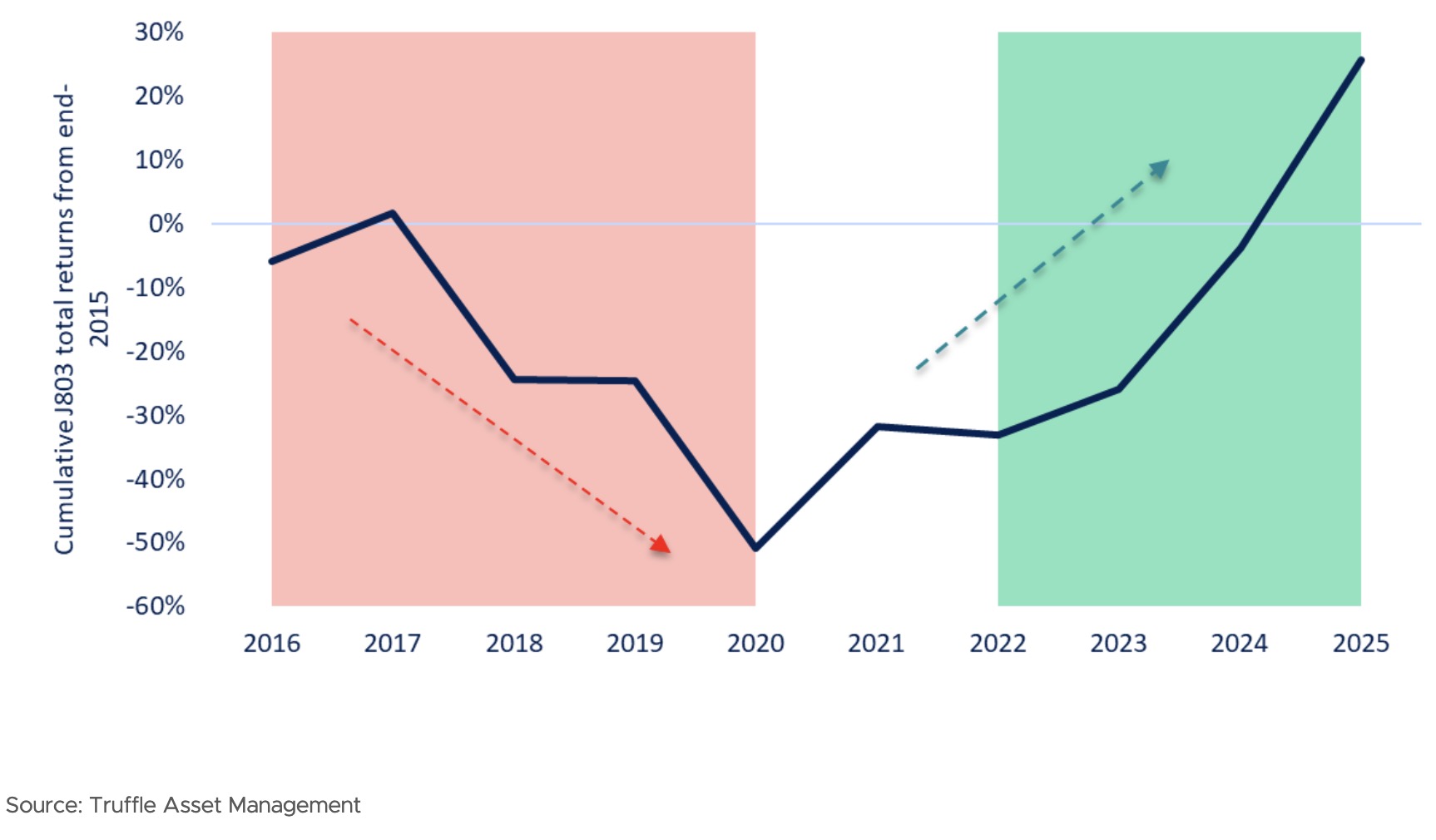
This shift matters not only because it improves funding costs, but because it supports a lower forward-looking risk premium and more favourable valuation conditions for real assets. Against this backdrop, listed property delivered approximately 70% total return over 2024–2025, shown in the chart below.
Chart 2: SA Listed property returns over the last decade
Importantly, the recovery to fitness has not been driven solely by valuation. Post-pandemic operational initiatives have played a meaningful role in restoring earnings resilience, including accelerated solar rollouts, continued cost rationalisation, tenant optimisation, and interest rate relief, which have translated into distributable earnings growth and guidance upgrades.
2026: building muscle
If 2024–2025 represented a credible return to routine, then 2026 is shaping up as a year focused on building strength. After a prolonged period of defensiveness, the sector is increasingly positioned to move from capital preservation to value creation – from repair to optimisation, and from reactive problem-solving to proactive compounding.
We see three key drivers underpinning this phase:
- The continued carry-through of rate cuts into FY26 earnings bases, with scope for further easing;
- Incremental operational upside from ongoing solar rollout and related resilience benefits; and
- Technology-enabled productivity gains as AI and property technology enhance operational intelligence, tenant engagement, and asset optimisation.
Returns: more carry than rerating
On current estimates and with several companies guiding to high single-digit FFO growth, we see a credible pathway for the sector to deliver a further 14%–15% total return in 2026, with scope for upside should rate cuts or lending margins surprise favourably.
That said, forward returns are likely to be driven primarily by income carry rather than a broad-based rerating, with valuation upside becoming increasingly selective as pricing normalises.
Progressive payout policies should further enhance the sector’s income appeal, with payout ratios expected to trend toward ~90%. At the same time, sufficient retained capacity for non-yielding, but necessary capex, remains important.
Portfolio reform: quality becomes the differentiator
This phase of the cycle brings greater structure. We expect continued portfolio sharpening through deeper nodal and precinct focus, increased sector specialisation, and a measured renewal of development pipelines. We remain more supportive of refurbishments and asset enhancement strategies than broad-based greenfield development in office and retail, while logistics and industrial assets retain relative appeal given more favourable supply-demand dynamics.
Investor attention is also shifting back toward the price of quality – the quality of assets, tenant covenant strength, capital allocation discipline, and management execution capability.
M&A: still attractive, but more complex
We remain constructive on M&A as a structural lever for the sector, particularly given that liquidity constraints remain a persistent headwind for South Africa’s listed property market. Consolidation into larger, more liquid entities could unlock cost and portfolio synergies. However, execution is likely to be more challenging than in prior cycles, given fewer deeply discounted targets, even as improved balance sheets increase transaction capacity.
In conclusion
In fitness, lasting progress comes when the focus shifts from short-term recovery to building real strength. South Africa’s listed property sector has already demonstrated its ability to recover. The test for 2026 is whether restored health can be converted into sustained performance, translating resilience into durable compounding. In our view, 2026 may mark the point at which the sector moves beyond recovery and getting into shape and starts building lasting strength and muscle.