


We’re living through one of the most accelerated eras of innovation in history. From the rapid rise of AI to breakthroughs in modern medicine, technology is reshaping industries at a pace few could have predicted. It took Facebook five years to reach 5 million users, yet ChatGPT reached the same milestone in just two months.
The speed of adoption is remarkable, and the implications for investors are significant. But while the opportunity set is expanding, so too is the challenge: how do you position for the future when disruption is constant, and today’s frontrunner could be tomorrow’s Betamax?
A lesson from nature
Sometimes, the most profound breakthroughs come from unexpected places. The Gila monster — North America’s largest lizard and one of its few venomous species — has become the unlikely hero in one of the most significant medical innovations of recent years. Back in the 1990s, endocrinologist Dr. John Eng discovered a hormone in the Gila monster’s saliva called exendin-4, which mimicked the GLP-1 hormone in humans. Unlike the human version, which breaks down in minutes, this compound remained active for hours. The result was the birth of a new class of drugs: GLP-1 receptor agonists.
These drugs are now transforming diabetes care by regulating blood sugar, improving insulin response, and suppressing appetite. With nearly one in eight people globally affected by diabetes — a condition that can shorten life expectancy by up to 14 years if diagnosed young — the public health implications are staggering.
The economic case is just as compelling. Diabetes accounts for approximately 10% of global medical expenditure, totalling over $1.2 trillion. GLP-1 drugs offer not only a way to reduce this burden but also a significant commercial opportunity for companies that can deliver effective and scalable treatments.
Is there a sustainable investment opportunity?
Novo Nordisk was first to market with a GLP-1 drug called Ozempic, extending the drug’s half-life to a week and pricing it at around $14,000 per year to recover research and development costs. Between launch and peak, Novo’s earnings per share tripled, its share price soared 35%, and it became the most valuable company in Europe.
Chart 1: Novo Nordisk share price
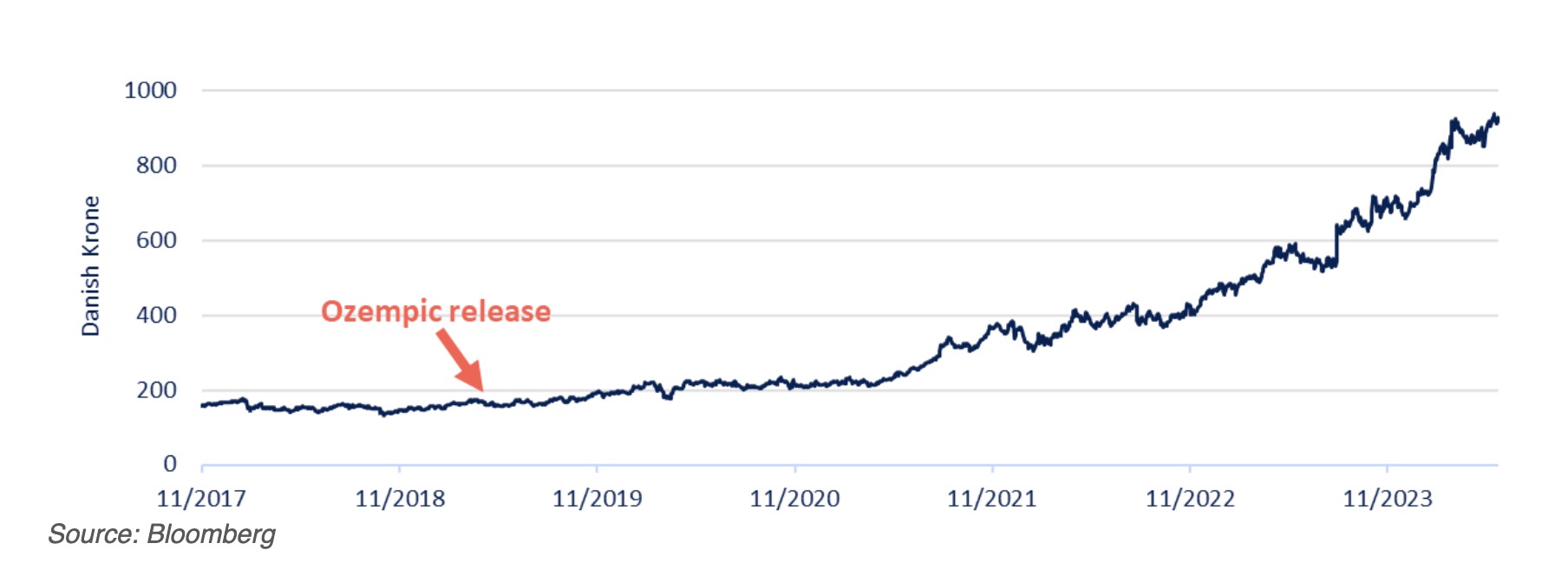
However, markets don’t stay static and economic moats are not infallible. Eli Lilly entered the market with a similar drug called Zepbound. This new GLP-1 drug was not only 35% more effective, but also significantly cheaper. Within months, Zepbound had captured the majority of new GLP-1 prescriptions. Eli Lilly even launched an oral version, bypassing the need for refrigerated injectables – another logistical win.
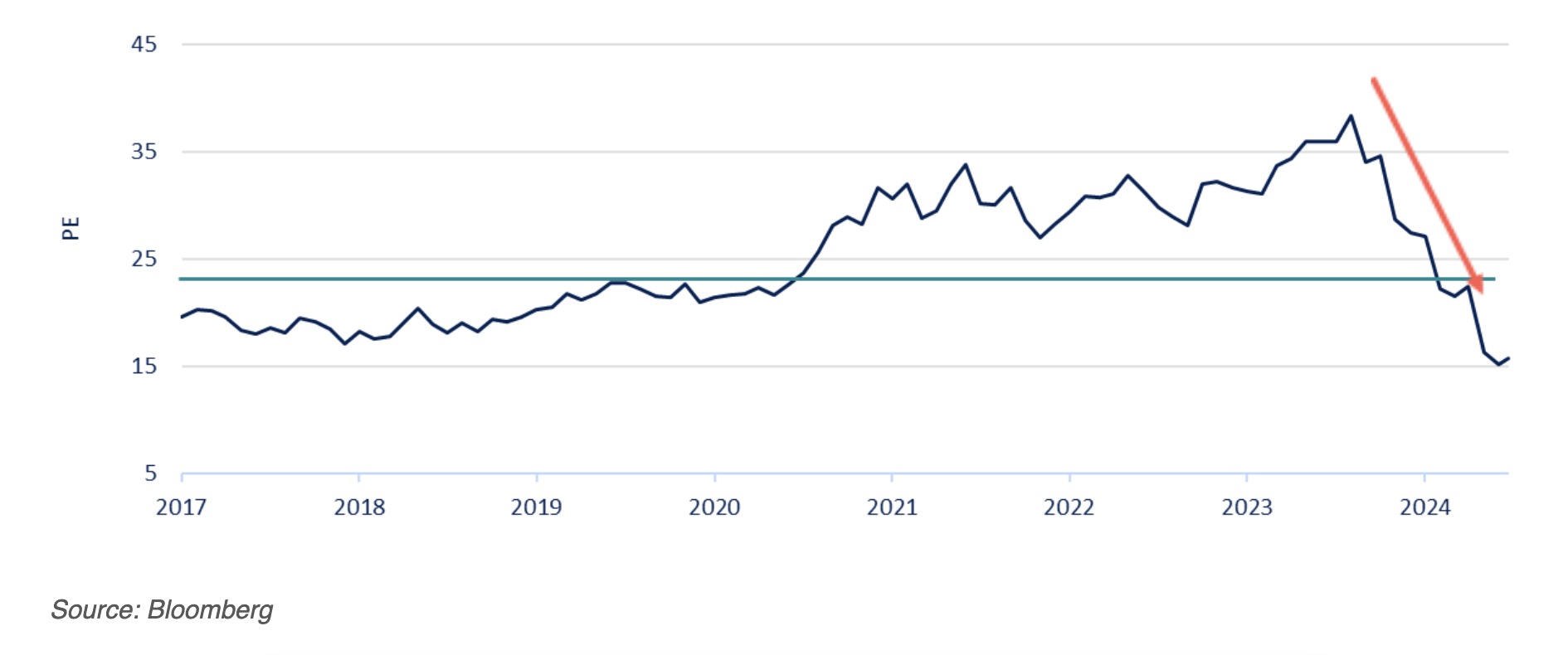
As competition intensified, Novo Nordisk’s share price came under pressure. This is a perfect example of how a new innovation can change the market and how quickly market leadership can be disrupted, even in highly profitable niches.
Chart 2: Eli Lilly’s launch led to downgrades to Novo Nordisk’s earnings
Investing in tomorrow’s winners and avoiding the losers
The temptation to chase “the next big thing” is understandable but often misguided. The winners of today are not necessarily longer-term winners. At Truffle, we stick to the basics. We place a strong focus on fundamental research, and apply a disciplined process when assessing the long-term sustainable value of a business. We aim to ensure we are not over-paying and focus on a sufficient margin of safety. We look for companies with durable competitive advantages, strong earnings power, and the ability to grow sustainably. We also continuously monitor our investments and track market changes that could threaten the margin of safety.
A good example is the Renk Group, a less flashy but deeply resilient business held in our portfolio. The company is a global manufacturer of military products including gear boxes. When we initially invested into this business it was trading at a price-to-earnings (P/E) ratio of 16, it’s now trading at 33. With Europe under pressure to grow military spending by 2–3% annually, Renk’s position in global defence manufacturing gives it a moat that’s hard to breach.
Earning real returns over time is not only about finding these winners. Avoiding permanent capital loss is critical. We therefore place a strong focus on protecting capital from downside risk. In our analysis, we favour investments with a higher probability of “right-tail” outcomes (significant upside) and controlled downside. In our view, this combination gives us the ability to consistently generate compounding returns.
Final thoughts
Market innovation and disruption will continue at a rapid pace, and we are challenged daily to consider new investments. For investors, the key isn’t to try and predict the next unicorn or follow the herd. We know it’s important to stay focused on what endures and to ensure there is a margin and safety: strong businesses, solid fundamentals, and processes that withstand the noise.
At the end of the day, there’s no such thing as “the next best thing.” But there is such a thing as well-researched investing with consistent outcomes.
